How to protect copper and equipment on construction sites
August 13, 2026 · updated August 29, 2026 · SiteFortress360
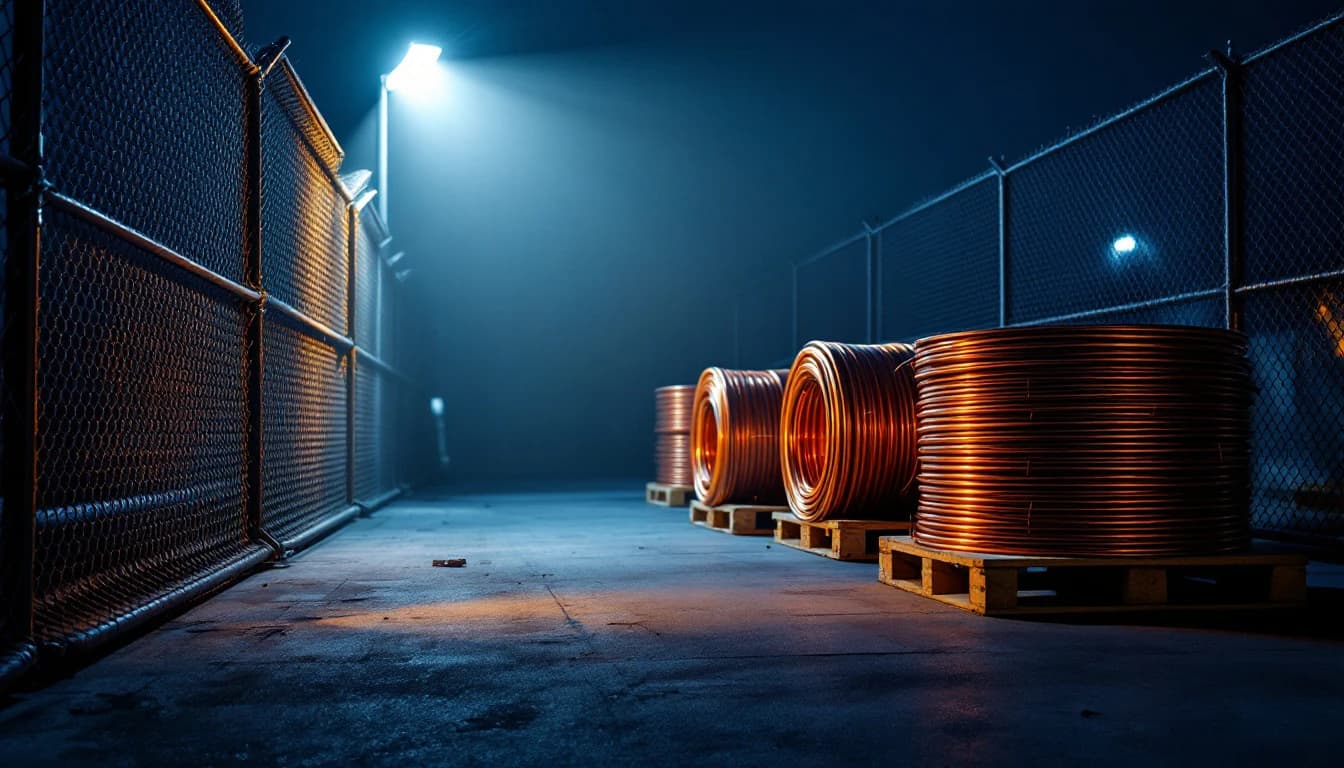
Direct answer: Protecting copper and equipment comes down to four disciplines: reduce what’s stealable on site (staging and delivery timing), make what remains identifiable (marking and documentation), remove the cover thieves rely on (sight lines, lighting, visible surveillance), and put real-time detection with active deterrence over the highest-value zones. No single measure works alone; the stack does.
Start with the target list
DFW jobsite theft is remarkably consistent: copper wire (installed and staged), tools from gang boxes and trucks, generators and compressors, fuel, and towable equipment. Rough-in through trim is peak copper exposure — the site is full of wire and open to a dozen trades. Plan security intensity around those phases, not around a flat calendar.
Reduce and document
Time copper deliveries to installation instead of staging weeks of wire; a laydown with three days of material is a smaller loss surface than one with three months. Photograph serials on equipment and major tools at mobilization, mark what can be marked (company ID, paint, trackers on towables), and keep the record where the PM can hand it to police in minutes. Recovery and prosecution both run on documentation that exists before the theft.
Deny the cover
Most site theft is a drive-up crime that depends on being unobserved for 10–30 minutes. Fencing that actually closes, one controlled gate, lighting on approaches, and — the strongest signal — a visible mast unit with strobe change target selection before anything is attempted. Thieves scout; make the scout report bad.
Detect and deter in real time
The layer that turns a hardened site into a defended one: AI detection zones over the gate, laydown, fuel and equipment rows, armed after hours; immediate siren/strobe on confirmed person events; talk-down where configured; recorded evidence for everything; and optional human monitoring running a written escalation plan. That is precisely the stack a SiteFortress unit deploys in a day — and the recorded events also settle the internal questions (which sub was on site Sunday?) that never make a police report.
Make the police report work for you
When a loss does happen, the first hour decides most of the outcome. A report filed with serial numbers, equipment photos, PIN locations and the relevant clips gets a case number that means something; a report that says ‘assorted tools and wire’ is a formality. Keep the mobilization inventory where the PM can attach it in minutes, pull the detection clips before the crew disturbs the scene, and report equipment theft to your insurer and — for registered machines — to the national equipment-theft databases carriers check. Recovery odds on stolen equipment are famously poor industry-wide; documentation is the lever that moves them, and it costs nothing before the theft.
Frequently asked questions
Should we prosecute, or is reporting a waste of time?
Report every time, prosecute when the evidence supports it — and with recorded, timestamped video it supports it far more often. Individual reports feed the pattern detection that lets police connect a crew hitting six sites, and insurers increasingly expect a report as a condition of the claim. The reason so many site thefts go unreported is that without documentation the report feels pointless; the mobilization inventory and detection clips are what turn it from a formality into a case.
When during a project is theft risk highest?
Two windows dominate. Rough-in through trim is peak copper exposure — the building is full of installed and staged wire, and a dozen trades keep the site open and busy enough that strangers pass unremarked. And any stretch when equipment sits idle over long weekends or holidays concentrates towable and fuel theft, because thieves get an uninterrupted window and a predictable absence. Plan security intensity around those two windows rather than spreading it evenly across the calendar.
What gets stolen most from DFW construction sites?
The target list is remarkably consistent: copper wire (installed and staged), tools from gang boxes and trucks, generators and compressors, fuel, and towable equipment. Exposure peaks from rough-in through trim, when the site is full of wire and open to a dozen trades — which is why security intensity should follow project phase rather than a flat calendar.
Why is copper theft so persistent?
Scrap value meets easy conversion: copper is untraceable once stripped, sells by weight, and a night of stripped rough-in can be worth thousands at scale while costing the project many times that in rework and schedule. The countermeasures that work attack the economics — deliver to installation instead of staging months of wire, deny the unobserved time window, and put recorded detection over the staging area.
Do warning signs and cameras actually deter thieves?
Visible, credible surveillance does; decoys and dead cameras get scouted out. Most site theft is a drive-up crime that depends on 10–30 unobserved minutes, and thieves scout before committing. A mast unit with a strobe changes the scout report: the site is watched, recorded and responsive. Deterrence fails when concealment is attempted — a hidden unit protects evidence but forfeits prevention, which is the wrong trade on almost every site.
What should I photograph and record before anything is stolen?
At mobilization: serial numbers on equipment and major tools, PINs on towables, model plates, and overview photos of each asset. Mark what can be marked with company ID or paint, note tracker installations, and keep the whole inventory where the project manager can hand it to police and the insurer within minutes. Recovery and prosecution both run on documentation that exists before the theft, not after.
Is fuel theft really worth defending against?
Yes, because it recurs. A single fuel visit is a few hundred dollars; the same crew returning weekly through a project is thousands, plus the morning downtime of drained machines. Fuel points are compact, high-value zones that AI detection covers cheaply — a zone over the tank, armed after hours, with siren and talk-down on person events, typically ends the visits the first week.
What does a surveillance unit add over fencing and lighting?
Fencing and lighting raise the effort of the visit; detection with active deterrence ends visits in progress and records them. The stack matters: fence and gate discipline shrink the attack surface, lighting and sight lines remove cover, and the unit adds real-time classification, immediate siren and strobe response, recorded evidence, and optional human monitoring running a written escalation plan. No single layer works alone — the stack does.