PTZ vs fixed cameras for construction sites
August 13, 2026 · updated August 29, 2026 · SiteFortress360
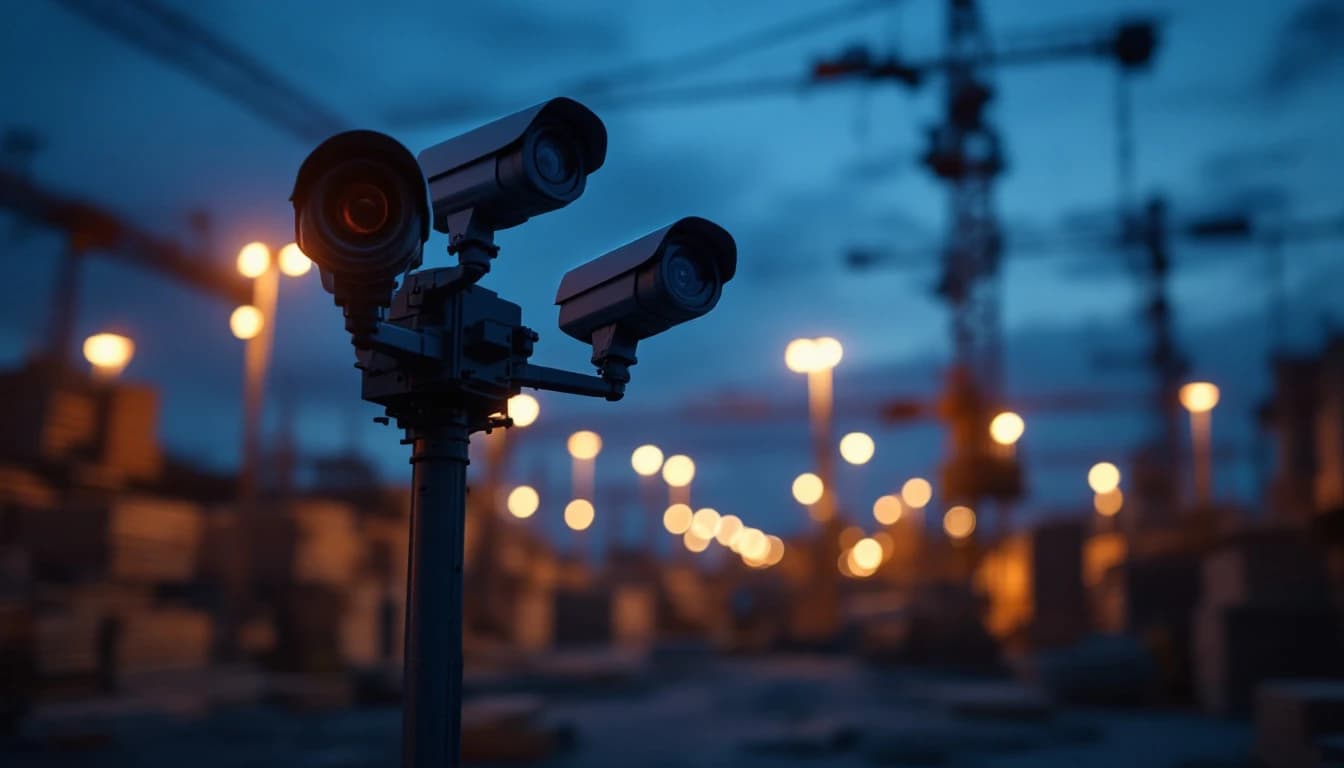
Direct answer: Fixed cameras provide constant, reliable coverage of defined zones — they never look the wrong way. PTZ (pan-tilt-zoom) cameras add zoom and movement for inspecting activity at distance, but a PTZ alone can miss events happening off-frame. The strongest configuration is both: fixed cameras for detection and recording, PTZ for inspection and tracking — which is exactly how the SiteFortress PTZ Pro is built.
The core trade-off
A fixed camera is a promise: this zone is watched, always. Detection zones, recording and AI classification all build on that constancy. A PTZ is a capability: it can look anywhere — which also means at any moment it is only looking somewhere. Systems that rely on a single PTZ patrolling a tour inevitably have the incident happen where the camera wasn’t.
What the PTZ is actually for
Distance and detail. On a large site, a fixed wide-angle at 20 ft tells you a person is at the far fence; the PTZ reads what they’re wearing, what they’re carrying, and the plate on the truck idling behind them. Where supported, tracking follows the activity as it moves. For evidence quality on big-acreage sites — logistics yards, dealerships, major construction — that detail is the difference between an incident report and an identification.
When to pay for it
Choose fixed-only (SiteFortress Mini or 360) when the site is compact enough that 4 cameras at height cover it with usable detail — most small and mid-size sites. Step up to the PTZ Pro when sight distances are long (200+ ft to the far fence), asset value is high, or incident detail matters enough to justify the seven-hundred-dollar monthly step up from the 360. The fixed cameras on the PTZ Pro keep continuous quadrant coverage regardless — the PTZ is additive, never a substitute.
How the AI uses each camera type
The detection layer changes this comparison in a way spec sheets miss. Edge AI runs its person and vehicle classification on the fixed cameras, because constancy is what zones and schedules are built on — a detection zone only means something on a camera that never looks away. The PTZ then becomes the response instrument: when a fixed camera flags a person at the far fence, the PTZ swings and zooms to turn a detection into an identification. Systems that put the AI on a patrolling PTZ get the worst of both — zones that only exist when the tour happens to pass them.
The practical upshot for buyers: judge any premium unit by whether its fixed coverage would stand alone without the PTZ. If the answer is no, the zoom is compensating for a coverage gap rather than adding capability — and the gap, not the zoom, is what will decide the bad night.
Frequently asked questions
Does adding a PTZ change what gets recorded?
Recording stays anchored to the fixed array — every quadrant, continuously, regardless of where the PTZ is pointed — and the PTZ adds a second, zoomed recording of whatever it is inspecting. That layering is deliberate: the fixed cameras guarantee nothing is missed, while the PTZ footage supplies the identification-grade detail for the events that matter. A system that only recorded what its PTZ was watching would trade away the guarantee for the detail, which is the wrong trade on a jobsite.
Do fixed cameras have blind spots between them?
A properly aimed four-camera array at mast height overlaps its quadrants, so the practical blind spots on a site come from obstructions, not from gaps between lenses — the concrete stack or steel that rises between the mast and a corner of the yard. That is a placement and site-evolution problem rather than a camera-count problem, which is why deployments verify the coverage map on camera at setup and why repositioning as the site changes shape is a normal, included part of the service.
Are PTZ cameras better than fixed cameras for a jobsite?
Neither is better — they do different jobs, and the strongest systems use both. Fixed cameras provide constant coverage of defined zones and are what AI detection and recording are built on; a PTZ adds zoom and movement for inspecting activity at distance. A PTZ alone can miss events happening off-frame, which is why it should be additive to fixed coverage rather than a substitute for it.
What can a PTZ camera see that fixed cameras cannot?
Detail at distance. A fixed wide-angle at 20 feet tells you a person is at the far fence line; the PTZ reads what they are wearing, what they are carrying, and the truck idling behind them. On big-acreage sites — logistics yards, dealerships, major construction — that detail is the difference between an incident report that says ‘unknown person’ and one that supports an identification.
When is the PTZ Pro worth the extra seven hundred a month over the 360?
When sight distances run long (200+ feet to the far fence), when asset value is high enough that incident detail matters, or when the site’s answer to ‘detect or identify?’ is identify. Compact and mid-size sites where four fixed cameras at mast height already deliver usable detail should keep the 360 — the upgrade buys reach and resolution you would not be using.
Can one PTZ camera replace four fixed cameras?
No, and configurations that try are where incidents slip through. At any moment a PTZ is looking somewhere, which means everywhere else is unwatched; a patrol tour just schedules the blind spots. Four fixed cameras watch four quadrants simultaneously with the same vigilance at hour one and hour nine. On the PTZ Pro, the fixed array keeps continuous coverage regardless of where the PTZ is pointed.
Does the PTZ track people automatically?
Where supported, yes — tracking follows flagged activity as it moves, keeping the zoomed view on the subject while the fixed cameras hold their quadrants. Even without auto-tracking, the practical workflow is the same: fixed cameras and their AI zones raise the event, and the PTZ is steered to it for detail. Detection stays constant; inspection goes wherever the event is.