Mobile security tower vs permanent camera installation
August 13, 2026 · updated August 29, 2026 · SiteFortress360
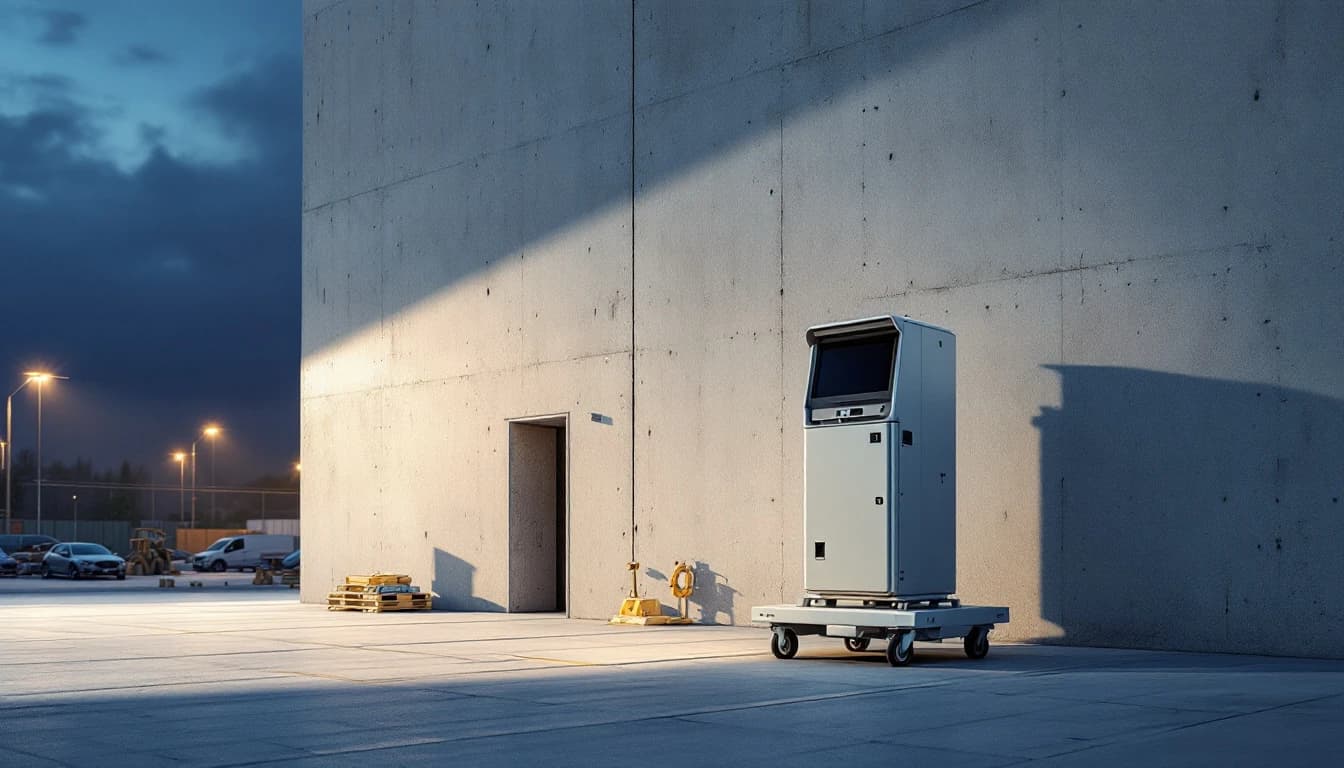
Direct answer: Permanent cameras win on stabilized properties with long horizons and existing power/network; a mobile tower wins wherever the need is temporary, the infrastructure is absent, or the property is in transition — construction, vacancies, expansions, incident response. Rent for states, install for steady states — many properties correctly do both.
The cost structures are different shapes
Permanent installation is capital: design, trenching, conduit, poles, licensed electrical work, network gear, then a recorder and per-camera maintenance — commonly five figures for a yard-scale system before the first month of service. A mobile unit is operating expense: $695–$1,695/month, deployed in a day, gone (or moved) when the need ends. The break-even math depends on horizon: a five-year stable yard eventually favors owned infrastructure; an 14-month construction project never does.
What permanent can’t do
Installed cameras are anchored to the property’s current shape. They can’t follow a construction site through phases, cover a vacant building only while it’s vacant, stand up an overflow lot for peak season, or respond this week to an incident wave. They also inherit the site’s failures: when the building loses power, installed cameras usually go dark exactly when things get interesting. An autonomous tower carries its own power, connectivity and recording.
What rental can’t do
A mast unit covers zones from a placement point — it is not forty discreet dome cameras threaded through an occupied interior, and it isn’t trying to be. Indoor coverage, dense per-door coverage on an operating facility, and integrations deep into building systems remain installed-system territory. The honest recommendation for many stabilized properties: install the permanent layer for the building, rent the autonomous layer for the yard, the vacancy, or the project.
The bridge pattern
A common sequence: a unit deploys during construction, stays through lease-up while the permanent system is designed and installed, then relocates to the owner’s next project. Security starts day one; capital gets spent once, on the final configuration rather than the interim one.
The code and trades cost hiding inside "permanent"
The line item people forget on permanent systems is that they are construction. Exterior camera runs mean trenching, conduit, poles and licensed electrical work to code, then network hardware and a recorder — every element with its own trade, lead time and inspection. That is why yard-scale installs land in five figures before the first month of service, and why the timeline is measured in weeks of scheduling rather than a deployment morning. None of it is wasted on a stable property with a long horizon; all of it is stranded capital on a site that changes shape next quarter.
There is also an organisational cost that never reaches the estimate: a permanent system makes the property owner its operator. Firmware, recorder storage, camera failures and network changes all become someone’s standing job, quietly, forever. A rented autonomous unit keeps operation on the vendor — health telemetry, maintenance dispatch and repositioning included — which is worth pricing honestly when the two options look closer on paper than they are in practice.
Frequently asked questions
Can the tower integrate with an existing installed camera system?
They coexist rather than merge, and for most properties that is the right answer. The installed system keeps doing what it was designed for — interior and per-door coverage on its own recorder — while the tower covers the yard, the vacancy or the project on its own power, connectivity and recording, with its alerts going to the same phones. Deep single-pane integration is the domain of installed-system vendors; what owners actually need day to day is both layers alerting the same people, which works out of the box.
How fast can a mobile tower be deployed compared to an install?
A tower goes from phone call to working system in days, and the on-site portion is a single morning: placement, mast up, cameras aimed, zones drawn, connectivity verified. A permanent installation is a construction project — design, trades scheduling, trenching, electrical, network and commissioning measured in weeks at best. For incident response, a vacancy that starts Friday, or a project already underway, that timeline difference is usually the whole decision.
Should I rent a security tower or install permanent cameras?
Rent for states, install for steady states. Permanent cameras win on stabilized properties with long horizons and existing power and network; a mobile tower wins wherever the need is temporary, the infrastructure is absent, or the property is in transition — construction, vacancies, expansions, incident response. Many properties correctly do both: permanent for the building, autonomous for the yard or the project.
How much does permanent camera installation cost compared to renting?
Different shapes of money. Permanent installation is capital: design, trenching, conduit, poles, licensed electrical, network gear and a recorder commonly reach five figures for a yard-scale system before maintenance. A mobile unit is operating expense at $695–$1,695 per month, deployed in a day. A five-year stable yard eventually favors owned infrastructure; a 14-month construction project never does.
What happens to permanent cameras when the site loses power?
Usually they go dark exactly when things get interesting — installed systems inherit the site’s power and network failures unless someone paid for UPS and cellular backup at every point. An autonomous tower carries its own solar power, battery reserve, connectivity and local recording, so a building outage, a cut line or a storm that takes the grid down does not take the security down with it.
Can a mobile tower replace an installed system on an operating facility?
Not for everything, and it should not try. Dense per-door interior coverage, forty discreet domes through an occupied building, and deep integrations with building systems remain installed-system territory. The honest split for stabilized properties runs the permanent layer for the building and the autonomous layer for the yard, the vacancy, or the project — each doing what the other cannot.
What is the bridge pattern between construction and permanent security?
A unit deploys during construction, stays through lease-up while the permanent system is designed and installed, then relocates to the next project. Security starts day one instead of at certificate-of-occupancy, and the capital gets spent once — on the final configuration of the finished property rather than on interim wiring that the next construction phase rips out.