How license plate recognition works at equipment yards
August 13, 2026 · updated August 29, 2026 · SiteFortress360
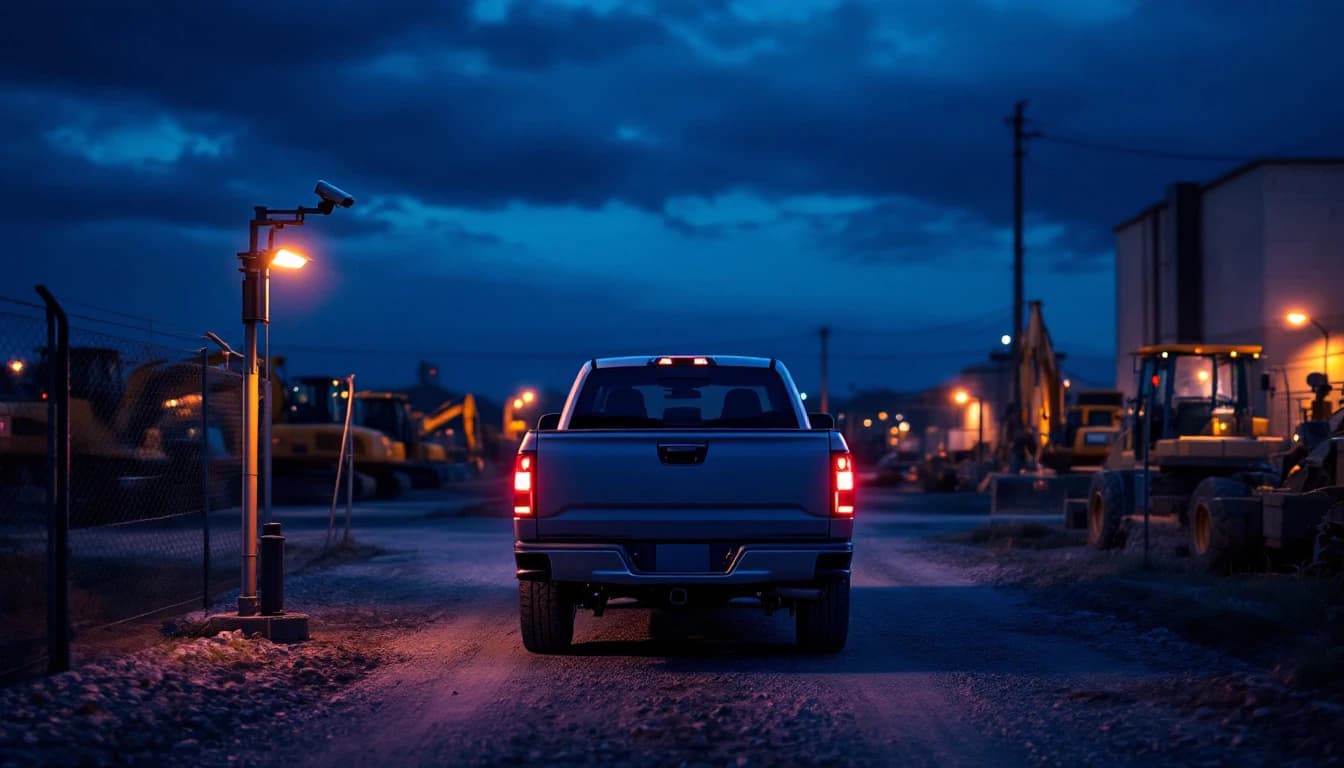
Direct answer: License plate recognition at a yard uses a dedicated camera mounted at plate height near the gate, with optics and processing tuned to read plates on vehicles entering and exiting. Each read becomes a searchable, timestamped event — building an audit trail of every vehicle movement, with alerts for unknown vehicles and lists for authorized ones.
Why the gate camera is its own camera
Plate capture is a geometry problem before it is a software problem. A wide-angle camera at 20 ft sees roofs and hoods at steep angles, motion-blurred and often washed out by headlights — great for detecting that a truck entered, useless for reading its plate reliably. LPR cameras mount low, aim shallow along the approach lane, and run exposure settings built for retroreflective plates at night. That is why SiteFortress360 sells LPR as a purpose-mounted add-on (+$199/mo), not a checkbox on the mast cameras.
What the yard gets out of it
Every entry and exit becomes a record: plate, timestamp, direction, linked clip. In practice that answers the questions yards actually ask:
- Which truck was on the yard between 2 and 4 AM Saturday?
- When did the rental skid steer leave, and behind which vehicle?
- Is this plate one of ours / a known carrier / a stranger?
- How many times has this unknown vehicle circled the gate this month?
Authorized lists and unknown-vehicle alerts
Where supported, authorized plate lists separate routine traffic (your crews, your carriers) from everything else. Routine plates pass silently into the log; unknown plates after hours raise alerts. Paired with gate control on compatible operators, the roadmap extends to plate-based entry — the gate opens for authorized plates on schedule, and every open is logged.
The quiet benefit is dispute resolution: carrier detention claims, “that delivery never arrived,” and sub-equipment walk-offs get settled by the log instead of by memory.
The plate log as an operations tool
Yards adopt LPR for security and keep it for operations. The same entry/exit log that flags a stranger at 2 AM also answers the daytime questions that eat dispatcher hours: when the sub’s trailer actually arrived, whether the carrier’s detention claim matches the gate record, which vehicle a missing attachment left behind. Because every read links to its clip, the answer comes with proof rather than a timestamp alone. Sites that run rental fleets find the discipline pays for itself in disputes avoided — the conversation ends when the log is on the screen.
One habit multiplies the value of all of it: decide who reviews the unknown-plate log and how often. A weekly five-minute scan turns the system from a forensic archive into an early-warning instrument — the unfamiliar plate that has circled the gate three times this month is a scout, and knowing that before the fourth visit is the whole game.
Frequently asked questions
Does LPR raise any privacy concerns for a private yard?
A private commercial yard recording vehicles at its own gate is squarely ordinary security practice — the same category as the badge reader on the office door. The sensible disciplines still apply: use the data for security and operations, keep access to the log role-based, and retain it for a defined window matched to your dispute horizon rather than forever. If your yard serves government or regulated customers with their own data requirements, raise that during the survey so the configuration matches the contract.
How long are plate reads kept, and can I export them?
Reads are retained as part of the unit’s event history, and the log is searchable and exportable for the situations that need a paper trail — an insurance claim, a police report, a carrier dispute. In practice the useful retention window matches your dispute horizon: detention claims surface within days, theft investigations within weeks. If your yard has a contractual or legal retention requirement, raise it during the survey so the configuration matches the obligation rather than the default.
Why can’t the mast cameras just read license plates?
Geometry. A wide-angle camera at 20 feet sees hoods and roofs at steep angles, motion-blurred and washed out by headlights — ideal for detecting that a truck entered, unreliable for reading its plate. LPR uses a dedicated camera mounted low near the gate, aimed shallow along the approach lane, with exposure tuned for retroreflective plates at night. That is why it is a purpose-mounted add-on rather than a software checkbox.
What does LPR cost as an add-on?
+$199 per month on top of the unit, covering the dedicated plate camera, its mounting and aiming at your gate during deployment, and the read-log capability itself. For yards with meaningful vehicle traffic it is typically the highest-value add-on available, because it converts the gate from a hole in the fence into a recorded checkpoint with a searchable history.
What information does each plate read capture?
Plate, timestamp, direction of travel, and a link to the video clip of the pass. Reads accumulate into a searchable log, which is what turns one-off captures into answers: which vehicles were on the yard in a window, when a specific unit left and behind which truck, and how many times an unknown plate has circled the gate this month. The clip link means every answer arrives with its evidence.
Can it alert me when an unknown vehicle shows up?
Yes, where supported — authorized plate lists separate routine traffic from everything else. Your crews and known carriers pass silently into the log; an unknown plate after hours raises an alert with the read and clip attached. Paired with gate control on compatible operators, the roadmap extends to plate-based entry, where the gate opens for authorized plates on schedule and every open is logged.
Does LPR work at night and in bad weather?
Night is its home turf — plate cameras are tuned for retroreflective plates under headlights, which is exactly the scene that defeats general-purpose cameras. Heavy rain and fog degrade any optical system, but the shallow mounting angle and short read distance keep captures usable in most conditions a truck would actually drive in. Reads that fail still leave the vehicle event itself on the mast cameras.